
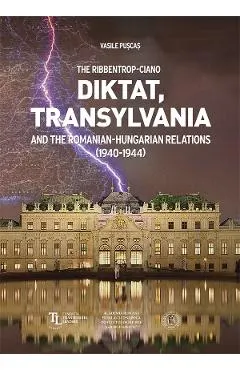
The Ribbentrop-Ciano Diktat, Transylvania and the Romanian-Hungarian Relations (1940-1944)

Prețuri actualizate de 4 ori pe zi. Bookuria primește un mic comision dacă cumperi după un click, fără cost în plus pentru tine.
Istoricul prețului
cel mai mic preț din toate librăriile, zi de zi, din 16 octombriePrețul n-a mai fost schimbat de pe 16 octombrie.
- Azi
- 105,72 lei
- Cel mai mic
- 105,72 lei16 octombrie
- Media
- 105,72 lei
- Cel mai mare
- 105,72 lei
Anunță-mă când se ieftineșteÎți scriem când prețul scade sub 105,72 lei (cu cel puțin 5%).
Despre carte
Editie in limba engleza.
However, since 1943, the Chancelleries of Moscow, London, Washington have been more and more concerned with Transylvania. In most cases, the interest of the Great Powers has been to maneuver Central European states on the basis of territorial aspirations, sometimes hidden under the slogan of minority rights. Transylvania continued to be seen as a territory of compensation!
In fact, the case of German-Italian arbitration and mediation in the Transylvanian issue (1940-1444) had less to do with the real rights of any minority (except perhaps of the German minority), because the population of Transylvania has experienced all the sufferings, from the nightmare of mass murders (Romanians in Northern Transylvania), to refugees, expulsions, loss of property and unimaginable frustrations, as evidenced by the reports of the two German-Italian joint commissions inserted in this volume.
Citește tot
Moreover, it contributed to the aggravation of the relations between Romania and Hungary, with consequences for them and for this part of Europe still insufficiently revealed by the historiographical investigation. At the end of World War II, both the Westerners and the Soviets reached the common conclusion that a better ethnic border between Romania and Hungary than the one drawn by the Trianon Treaty was not possible.
But this decision came after a huge historical tragedy experienced by Transylvanian inhabitants (Romanians, Hungarians, Jews, Germans, etc.) between 1940 and 1944. It was a traumatic experience both for the Romanian and Hungarian population.
— Vasile Puscas
Recenzii de la cititori
Toate recenziile →Ai citit cartea? Spune-le și altor cititori cum ți s-a părut. Recenziile se scriu din contul gratuit de cititor.
Încă nicio recenzie de la cititori. Fii primul care scrie una!
Alte ediții
Alte cărți de Vasile Puscas și asemănătoare
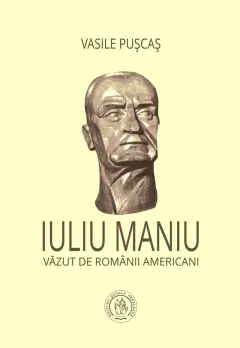 Iuliu Maniu văzut de românii americaniVasile Puscas
Iuliu Maniu văzut de românii americani
Vasile Puscas 60,00 lei
la Libraria Humanitas · 2 librării
Dictatul de la Viena, Transilvania si relatiile romano-ungare (1940-1…Vasile Puscas
Dictatul de la Viena, Transilvania si relatiile romano-ungare (1940-1944)
Vasile Puscas 63,43 lei
la Libris.ro
 Magna Civitas. The Worlds of Our WorldVasile Puscas
Magna Civitas. The Worlds of Our World
Vasile Puscas 70,00 lei
la Libris.ro
Istoria din cotidianVasile Puscas
Istoria din cotidian
Vasile Puscas 42,30 lei
la Libris.ro
Keith Hitchins. The Historian s Honesty. Onestitatea istoriculuiVasile Puscas
Keith Hitchins. The Historian s Honesty. Onestitatea istoricului
Vasile Puscas 31,72 lei
la Libris.ro
Negocieri pentru parteneriateVasile Puscas
Negocieri pentru parteneriate
Vasile Puscas 31,72 lei
la Libris.ro